
Microsoft has inaugurated its India South Central data centre region in Telangana, marking its fourth cloud region in the country and significantly expanding its cloud and AI infrastructure. This strategic investment supports Telangana's ambitious goal of achieving 5 GW of data centre capacity by 2029 and attracting USD 30 billion in digital infrastructure investments, further solidifying Hyderabad's role as a global technology hub.

'Hydro-seismicity is a phenomenon that typically shows up during and just after the monsoon.' 'Heavy rain causes water to percolate deep into the rock, and where there are fractures, that water fills the pores and builds up what we call pore water pressure.' 'That pressure can widen existing cracks, and eventually the rock gives way -- which surfaces as tremors.'

Microsoft has inaugurated its India South Central datacenter region in Telangana, marking its fourth cloud region in the country. This expansion aims to bolster India's cloud and AI infrastructure, with Telangana targeting 5 GW of datacenter capacity by 2029 and attracting significant investment in the digital ecosystem.

'I don't think the government will sacrifice such a fine institution for monetary gains.'

Government sources state that Meta, due to its algorithmic amplification of content, can no longer be considered a "simple intermediary" but rather a "service provider," implying greater responsibility and potential loss of legal immunity. This shift comes as Meta commits to directly reporting child abuse content to Indian law enforcement, amidst increasing government scrutiny over harmful online content and algorithmic bias.

The search for N Chandrasekaran's successor as Tata Sons Chairman has reportedly narrowed to Tata Steel CEO T V Narendran, Tata Sons Executive Director Saurabh Agrawal, and NSE MD & CEO Ashish Chauhan, with Chauhan emerging as a potential 'dark horse' candidate.

A stake sale by Tata Trusts will help it to have a larger corpus that could be used to balance the unequal dividends that flow from Tata Sons on an ongoing basis.

Trinamool Congress leader Saket Gokhale has accused the Election Commission of India (ECI) of withholding details about the software and algorithm used for the Special Intensive Revision (SIR) of electoral rolls. Citing an RTI response, Gokhale highlighted the ECI's claim that the information relates to "commercial confidence, trade secrets and intellectual property matters," raising concerns about transparency in the electoral process.

A joint report by Dell Technologies and Zinnov reveals that despite high ambition, nearly 70% of India's Global Capability Centres (GCCs) are stuck at the pilot stage for AI adoption. Foundational gaps in data, infrastructure, and governance are identified as key bottlenecks preventing the scaling of AI initiatives into enterprise-wide production. The report highlights the need for significant reskilling of the workforce and robust foundations for industrialising AI responsibly.

Uttar Pradesh Governor Anandiben Patel addressed AI Manthan 2.0, advocating for the comprehensive integration of Artificial Intelligence across all university subjects rather than as a standalone course. She urged universities to develop clear, time-bound AI roadmaps covering education, research, healthcare, and agriculture, emphasising indigenous AI development, employment creation, and the importance of "Safe and Trusted AI." The event also saw the formation of an AI Policy Advisory Group and an AI Implementation Group to drive these initiatives.

PTI Editor-in-Chief Vijay Joshi emphasised that democracy thrives on citizens who question everything, not those who blindly believe or disbelieve. Speaking at 'Media Conclave 2026', he highlighted the challenges posed by social media, the focus on speed over verification, and AI-generated fake content, stressing the importance of media credibility for informed decision-making.
Researchers at BRIC-RGCB in Thiruvananthapuram have developed a novel nanopore-based sensing technology. This innovation allows for the early and highly sensitive detection of biomarkers associated with neurodegenerative diseases like Parkinson's and ALS, addressing a critical challenge in current diagnostic methods. The technology, published in Nature Nanotechnology, uses self-assembling dual-diameter nanopore sensors to identify disease-specific biomarkers even at low concentrations.

Before protesting against the State, the citizen should not have to ask: Sir, may I protest, please?, asserts Prem Panicker.

Union Finance Minister Nirmala Sitharaman expressed strong confidence in India achieving over 10 per cent economic growth, advocating for increased technology adoption and innovation. She urged overcoming scepticism and highlighted technology's transformative role in agriculture and public sector reforms, while also launching a new fund and book at an IIT Madras event.

Following devastating flash floods in Nepal, experts are calling for systematic scientific assessments of glaciers to understand and mitigate hazards, alongside the development of a robust land use policy for the Himalayan region. The floods, which killed over 460 people and left thousands missing, are believed to be linked to climate change impacts on glaciers and permafrost.

'IN-SPACe like an octopus is stretching its tentacles everywhere and choking ISRO.'

Nepal's Hindu groups have sought an all-party discussion on restoring Hindu-nation status within three months.

State Bank of India Chairman C S Setty stated that banks will take three to four months to deploy the significant funds mobilised through foreign currency non-resident (bank), or FCNR(B), deposits, which is unlikely to cause "abnormal lending". He also highlighted the need for agentic artificial intelligence (AI) costs to fall sharply for its widespread deployment in India, envisioning its role in transforming banking from fraud detection to personalised financial assistance.

Education sector experts agree that using the "best technology" was essential to ensure students did not have to sit for an examination all over again because of a question paper leak.

The larger question raised by the associations is simple: If ISRO is no longer to manufacture launch vehicles, what will happen to the institution's accumulated capabilities and the people who built them?

Digital money is gradually starting to behave like software. It's no longer inert -- sitting passively in accounts. In the not-so-distant future, your money could become 'smart' and 'active,' understanding your preferences, paying your bills automatically, optimising your returns, and managing your risks -- all without you having to manage the details.

India's largest retirement fund manager, the Employees' Provident Fund Organisation (EPFO), is enhancing its investment governance and fund management practices, following the Reserve Bank of India's recommendations.

'Value is not where you make money in India. It never has been.' 'You have to buy momentum.' 'Momentum is in technology, and I don't see that slowing down because I believe the AI infrastructure boom is going to last for a while.'

Chief Justice of India Surya Kant stated that while artificial intelligence (AI) can augment judicial reasoning, it cannot substitute judicial conscience, and a permanent apex body is proposed to supervise AI adoption and accountability within the judiciary.

'Now the institutions which have the might of law invested in them think that whatever they do is right.'

US President Donald Trump is expected to sign the Lindsey O. Graham Sanctioning Russia and Iran Act of 2026 later on Friday (local time). A White House official confirmed the development to ANI without revealing further details.
Karnataka Chief Minister D K Shivakumar met with AI major Anthropic to discuss a long-term partnership aimed at accelerating AI adoption across governance, education, healthcare, research, and the state's startup ecosystem. The collaboration focuses on deploying AI solutions responsibly, ensuring data privacy, and developing AI-focused skilling programmes and an AI University.

India and China are in what experts call 'a cooperation-versus-competition situation'.

The question for the next 20 years is not whether India can become a $5 trillion or $10 trillion economy. Those are attractive targets, but the real question is whether India can create enough productive jobs, educate its children properly, make its cities liveable, and give hundreds of millions of people a substantially better life, asserts Ramesh Menon.

China on Monday dismissed claims linking its massive hydropower projects in Tibet to the August 26 flash flood disaster in Nepal, calling them "malicious speculation".

A rocket designed and developed by ISRO is being transferred to industry for production.
Nine ISRO associations want to know whether this is simply an effort to expand India's industrial capacity or part of a larger policy under which ISRO itself will eventually withdraw from rocket manufacturing.

Analysts predict that crude oil prices and the ongoing US-Iran conflict will be the primary drivers of stock market movements, with investors also closely watching the Jackson Hole symposium for cues on interest rates.
Domestic institutional investors (DIIs), driven by the popularity of mutual funds, have emerged as significant stabilising forces for Indian capital markets amidst global volatility and foreign portfolio investment (FPI) outflows, according to Sebi whole-time member Amarjeet Singh.

Indian pharmaceutical companies are not rushing to relocate manufacturing to the United States despite former President Donald Trump's renewed threat of tariffs up to 200 per cent on imported generic drugs. Instead, they are leveraging existing US plants, contract manufacturers, and making selective investments in complex products while maintaining India as their primary production hub.
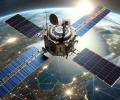
Nebex, founded by former Axiom Space executives, aims to build commercial infrastructure for the global space economy.

Southern chief ministers fear population stabilisation could reduce their parliamentary representation and tax devolution benefits.
Researchers at IIT-ISM Dhanbad have been granted an Indian patent for an electrochemical reactor designed to recover copper from industrial wastewater. This innovative technology offers an environmentally sustainable solution for resource recovery and wastewater treatment, particularly benefiting the mining and metallurgical sectors.

Few leaders since Independence have been able to establish such a direct connection with the electorate or shape the national conversation to the extent that Narendra Modi has done over the past decade, points out former Union minister Dr Karan Singh.

The FCNR (B) stratagem relies on using public money to defend the rupee. The State subsidises foreign borrowing to attract dollars. This tool requires large-scale borrowing to make a material difference against a gross external flow of $11 billion a day. A commensurately large fiscal cost falls upon the exchequer. The ministry of finance will choose how much it is willing to spend in exchange for this round number, points out Ajay Shah.

'Once you're wrestling with making a merger of that scale value-accretive, you're also under pressure to keep growing the balance sheet and chasing liabilities, and other things start to slip as a consequence.'
